
Family carers often carry a quiet background question: what if something happens when I am not there? Technology can make contact easier and create clearer ways to ask for help. It cannot remove every risk or replace people, care planning and emergency arrangements.
Understanding that boundary leads to better choices and more sustainable reassurance.
Match the tool to the worry
If the main concern is that a parent cannot navigate a normal phone, a one-touch handset may help. If they want a way to raise an SOS and share location while out, a GPS personal alarm may be more relevant. If the concern is a specific health or care need, seek appropriate professional advice.
Avoid buying a device with many functions in the hope that one of them solves an undefined problem. Write the concern down, then decide what outcome would make daily life easier.
Build a response network
A button is useful only if the people or service behind it know what to do. Choose contacts who are willing, available and clear about their role. Decide who is first, who is backup and when emergency services are appropriate.
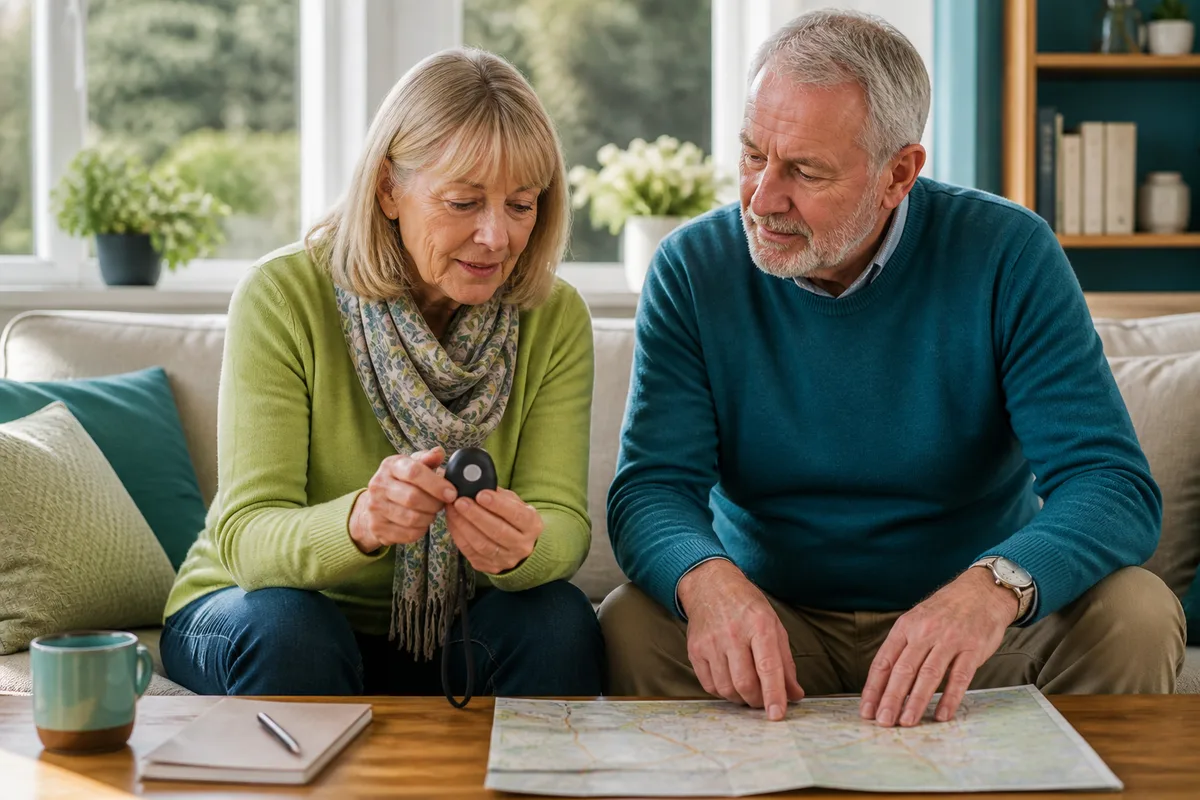
OwnFone can make familiar people easier to call. Footprint can be paired with up to three family mobiles and is designed to send an SOS location message before calling contacts in sequence. Review OwnFone for families for the confirmed product details.
Keep ordinary contact alive
Do not let the device become a symbol of emergencies. Use it for everyday conversation. Regular successful calls build familiarity, keep contacts current and make the technology less intimidating when someone genuinely needs help.
Expect imperfect availability
Mobile devices depend on battery, network availability and being carried. Contacts may miss calls. GPS location can be affected by environment. Test the complete arrangement and keep alternative plans.
Care for the carer too
Technology should not create an expectation that one relative watches a portal continuously or answers every call. Share responsibilities and set realistic boundaries. If caring responsibilities are affecting your wellbeing, seek support from appropriate carer services.
Peace of mind is not certainty. It is confidence that the person has a clear way to connect and that everyone understands the plan around it.