
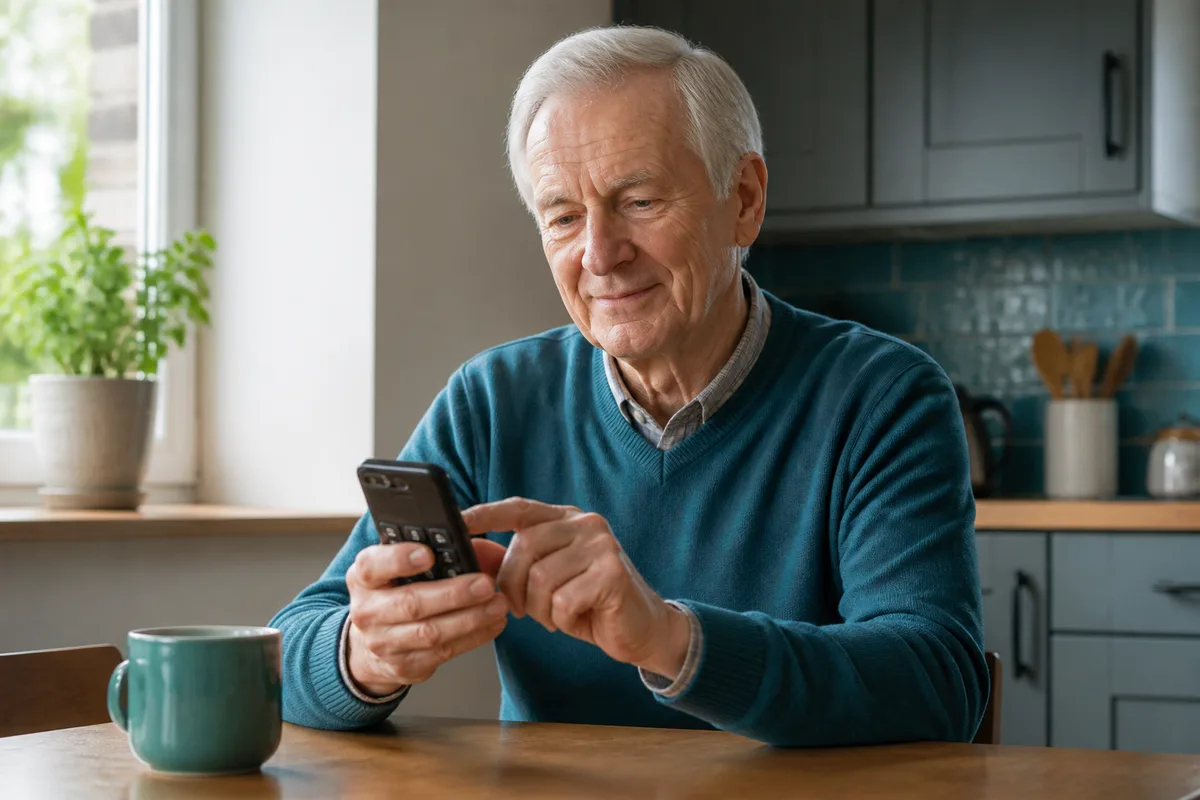
Changes in grip, reach, coordination, speech or number recognition can make a familiar phone unexpectedly difficult after a stroke or with conditions that affect dexterity. The goal is not to find a product carrying a particular label. It is to reduce the physical and cognitive effort required for the calls the person wants to make.
This guide offers general practical considerations. An occupational therapist or relevant clinician can give advice tailored to the individual.
Observe the complete movement
Look beyond button size. Can the person pick the phone up from a table? Hold it securely? Reach the required buttons with their preferred hand? Press once without triggering neighbouring controls? Return it to charge?
A lightweight handset may reduce effort, while a lanyard can make it easier to keep nearby. Clear spacing and one-touch calling can remove repeated movements. A stable place for the phone and charger may matter as much as the handset design.
Reduce recognition and sequencing demands
Some people experience difficulty with numbers, reading or multi-step sequences. Personalised buttons can connect a familiar cue directly to an action. A photograph of a partner or a clearly printed name may be easier to use than remembering where that person sits in a digital contact list.
OwnFone can use names, photographs or high-visibility buttons and can hold up to 12 chosen contacts. It is programmed before delivery, so the person does not need to navigate setup menus. See OwnFone’s personalisation options.
Set up around the stronger routine
Place the most important contacts where they are easiest to reach. If one hand has better control, orient the phone and charging area accordingly. Keep the layout stable once learned.
Practise a small number of meaningful calls rather than running a long training session. Start with the person they call most. Build confidence before adding more contacts or instructions.
Plan for communication difficulties
If speech is affected, contacts should understand how to respond patiently. Agree what silence, a short phrase or an ended call might mean. Keep relevant professional advice and emergency arrangements separate from the phone itself; no mobile handset replaces an agreed care or emergency plan.
Review after real use
Needs may change during recovery. Revisit button labels, contact order, carrying method and airtime after a few weeks. The most suitable phone is the one that fits the person’s current abilities while leaving room for confidence to grow.