
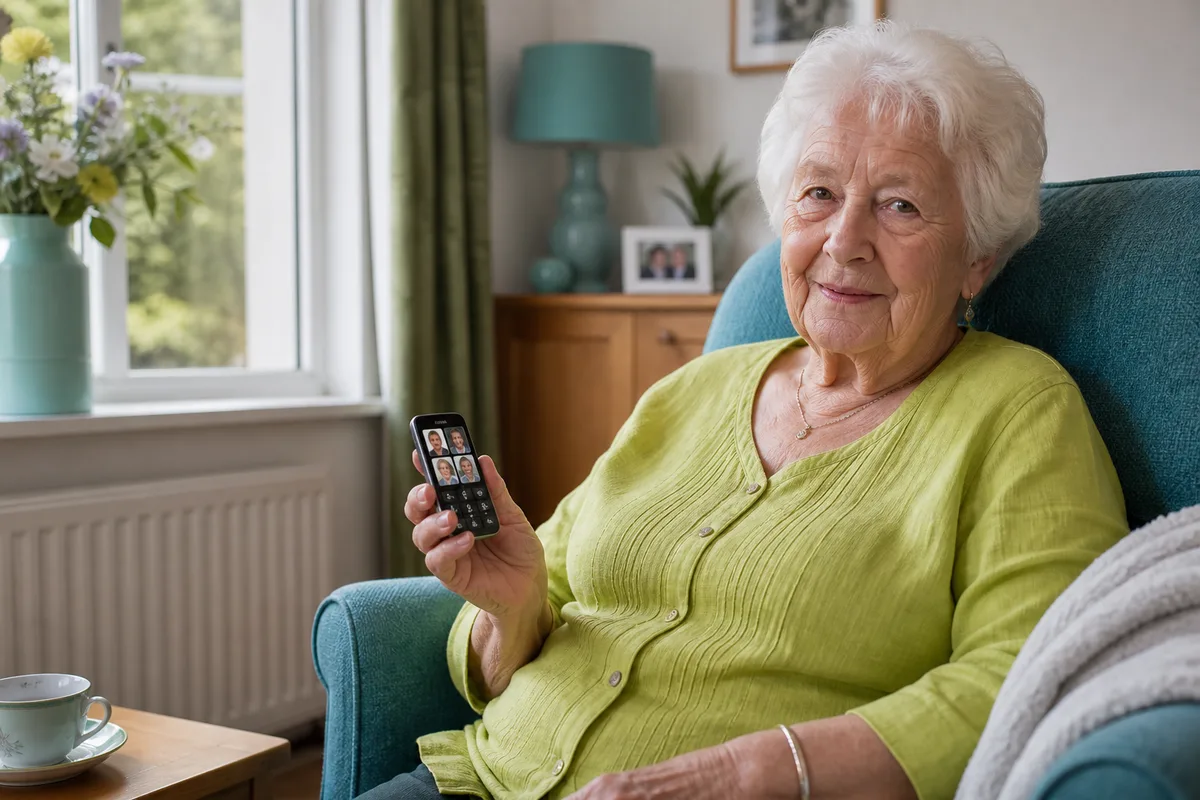
The best simple mobile phone for an older person is not necessarily the handset with the longest feature list. It is the one they can understand, carry and use confidently on an ordinary day and when they feel under pressure.
That makes choosing a phone a person-centred decision. Start with the calls they want to make, the people they want to reach and the parts of conventional phones that currently get in the way.
Begin with the person, not the specification
Ask a few practical questions. Do they mainly call family, neighbours or a support service? Can they recognise names more easily than numbers? Would photographs help? Do small keys, touchscreens or nested menus create difficulty? Will the phone be carried in a pocket, on a lanyard or kept in one familiar place?
Watch how the person uses their present phone if possible. A short observation often reveals more than a checklist. They may be comfortable answering calls but struggle to find a contact, or understand the green call symbol but not a touchscreen gesture.
Features that genuinely simplify calling
Useful features can include:
- clear, well-spaced buttons;
- one-touch access to familiar contacts;
- names, photographs or high-visibility layouts;
- a lightweight design that is easy to carry;
- a straightforward charging routine;
- reliable mobile connectivity where the person spends time;
- preparation before delivery, rather than expecting the user to configure it.
OwnFone is designed around this focused approach. It can be personalised with up to 12 chosen contacts and arrives programmed, with no apps or complicated menus to learn. Explore how OwnFone works before comparing that approach with a conventional feature phone or smartphone.
Simplicity should preserve choice
A simple phone should not feel like something imposed on a person because of their age. Involve them in choosing the design, button labels, photographs and people included. Familiarity creates ownership, while ownership makes regular use more likely.
It is also worth agreeing who will help if a contact changes, the phone needs charging or the airtime plan needs reviewing. A clear support routine is as important as the handset itself.
Try the whole journey
Before relying on any new phone, practise making and receiving calls in the places it will be used. Check the sound, button visibility, grip and mobile signal. Put the charger somewhere obvious and write down the support number.
The right result is simple: the person knows what to press, trusts what will happen next and feels more connected rather than more managed. If that is the outcome, the technology is doing its job.
Build a personalised OwnFone or review OwnFone plans and pricing.